Confinement Areas

Now is the time to get ready for winter, before cold, dark, and wet days make chores extra difficult. Here are four quick tips for getting ahead of the issues many horse owners face during the winter months.

$3.99

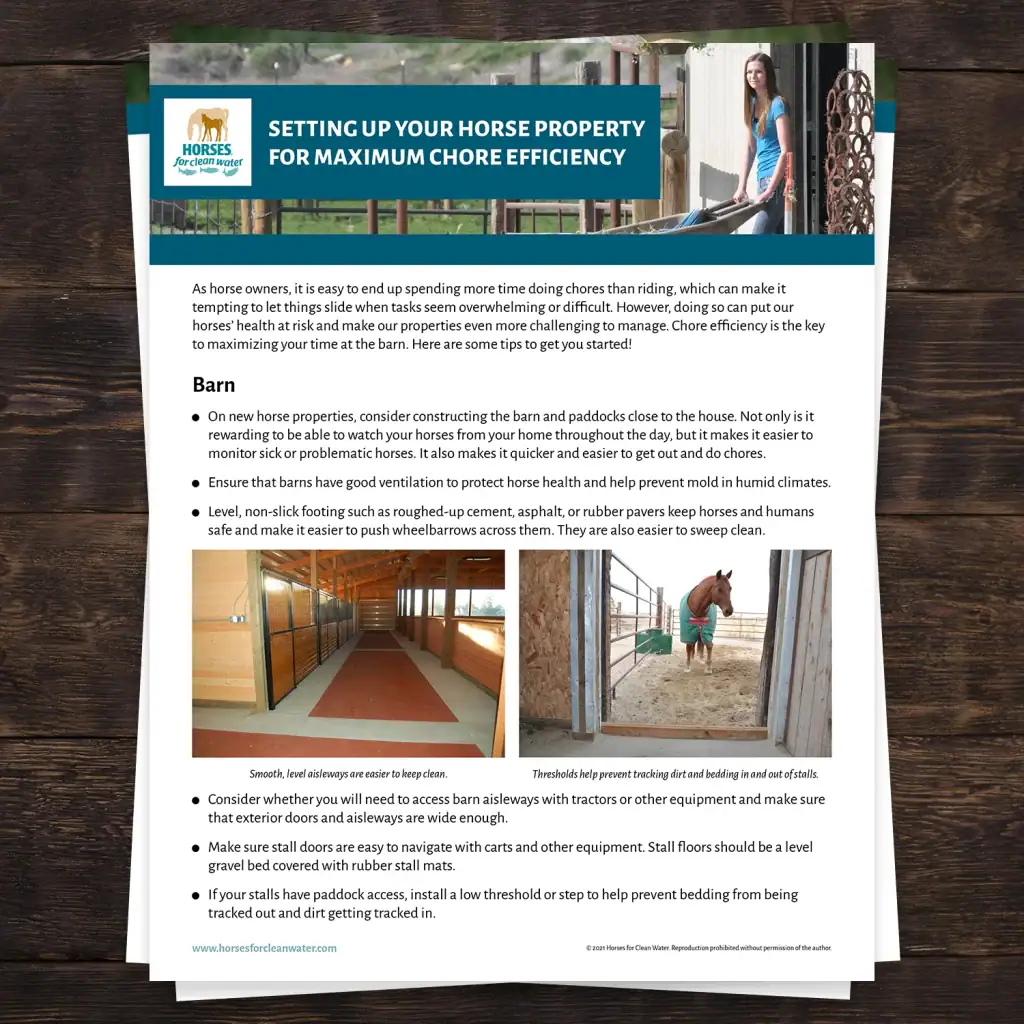
Time is precious, especially at the barn. It's easy to end up spending more time doing chores than riding, which can make it tempting to let things slide when tasks seem overwhelming or difficult. However, doing so can put our horses’ health at risk and make our properties even more challenging to manage. Here’s your go-to guide for streamlining chores so you can get back in the saddle as soon as possible!
As horse owners, we need to consider the impacts we have on our neighbors and the environment. By increasing our awareness of how we impact the environment and taking steps to minimize that impact, we can help preserve the equestrian way of life that we enjoy. 

$3.99

There are many reasons why a horse might need to be kept in a confinement area, including recovery and rehabilitation after an injury, predisposition to founder, protecting pastures during wet weather, or preventing damage caused by overgrazing. However, horses kept in confinement can easily become bored, which can lead to health and behavioral issues. Track paddocks and slow feeders are two enrichment techniques that mitigate boredom and encourage natural behaviors.